
Methodical and clear
“They walked the same checklist they describe here — symptom, model, temperatures, then the part. Nothing skipped.”
Sofia R. · Elmwood
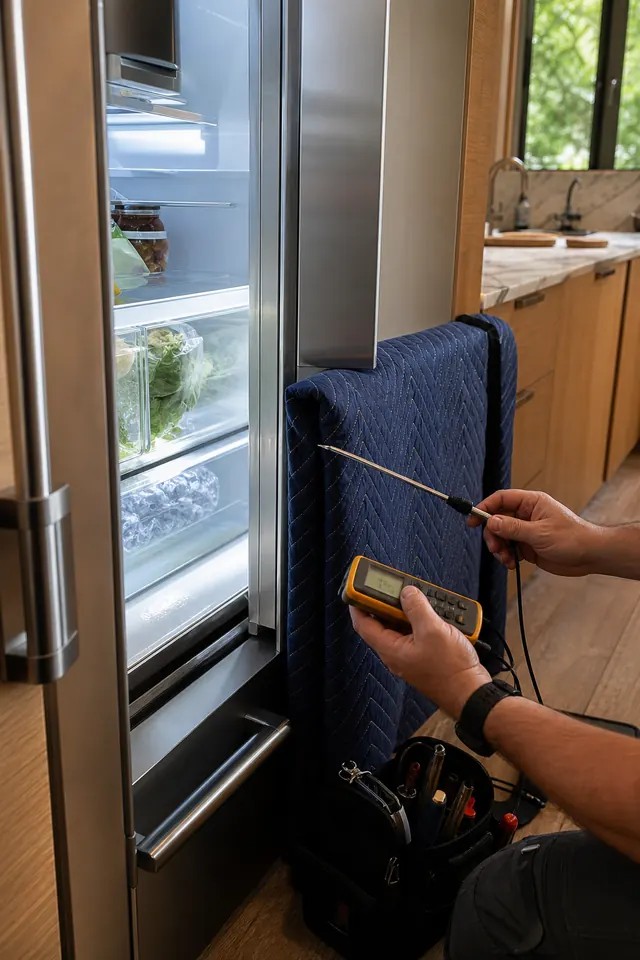
When a Sub-Zero stops cooling in Berkeley, the first job is to read the unit, not to swap parts. A warm box on a built-in column is just as often a control board, thermistor or display alarm as it is a fan or a frosted coil, and only a meter and a temperature probe tell them apart. We run that triage across Berkeley and on our Piedmont route, where damp marine air and condenser dust shorten the life of fans and seals. Tell us which compartment is failing and we will give an honest first read — sometimes it is a clean and a fan, not a compressor.
On a dual-refrigeration Sub-Zero the fresh-food side has its own evaporator and fan, so it drifts warm while the freezer holds near 0F. Berkeley Sub-Zero Repair probes both compartments and checks the stalled fan or frosted coil before any compressor talk, serving Elmwood near 94708. Call 510-390-9712 with both temperatures ready.
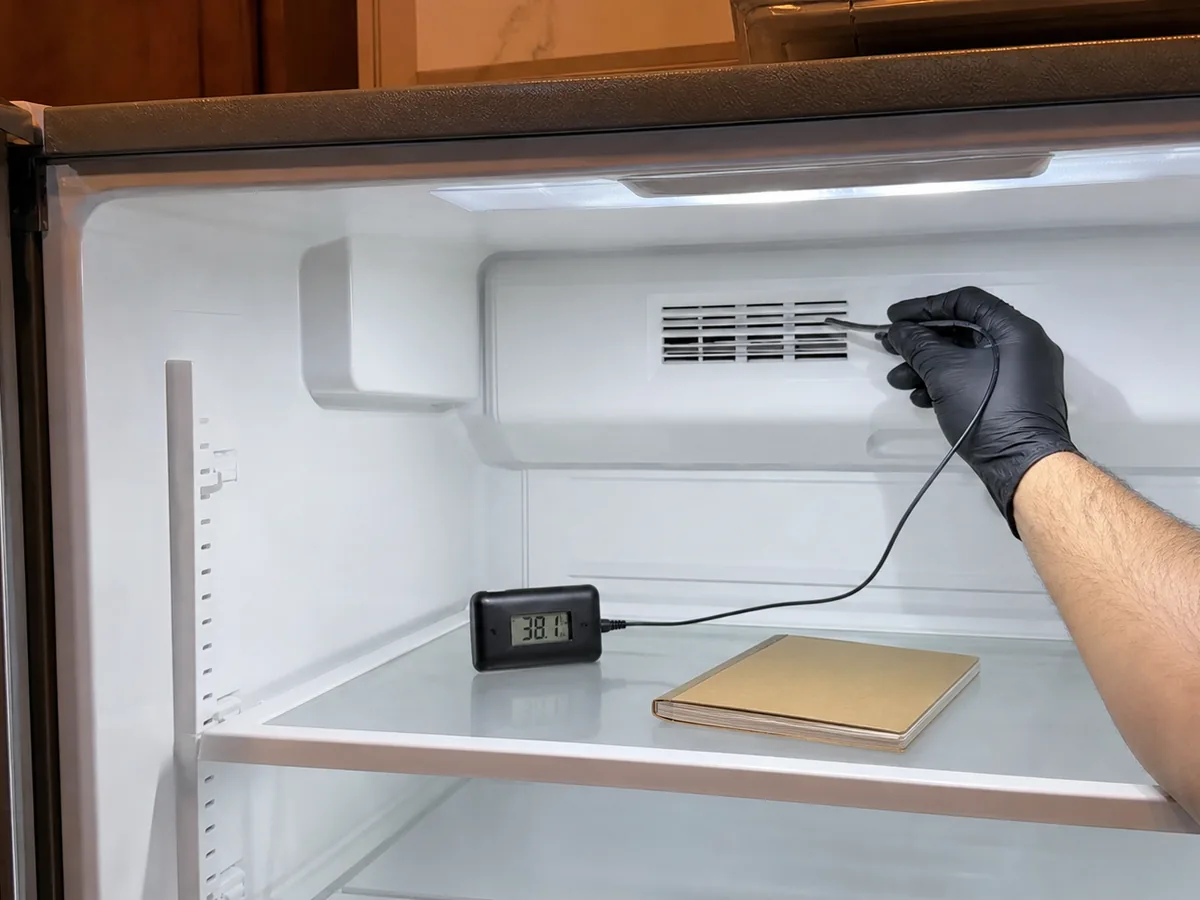
A Sub-Zero built-in is not one cold box with a divider — on the dual-refrigeration models the fresh-food section and the freezer each have their own evaporator coil and their own fan. That is why you can open the upper door to soft butter and warm milk while the freezer below is still rock solid. The cold is simply not being made or moved on the fresh-food side. What confirms it is a temperature probe in both compartments plus watching the upper evaporator fan and checking the coil for frost: if the freezer reads near 0°F and the fresh-food box reads in the 40s or 50s, the fault lives in the upper circuit — the fan, the defrost cycle, or the thermistor telling the board what it thinks the temperature is. The honest limitation: on a single-compressor model this split is less diagnostic, because both compartments share one cold source, so a warm-everywhere reading needs the wider triage below before anyone names a part.
"Not cooling" is really three different problems wearing one name. Sorting which one you have is the first real step, because each points at a different short list of causes. Normal is a fresh-food box near 38°F and a freezer near 0°F, both cycling on and off. Abnormal is anything that drifts and stays drifted.
A Sub-Zero fresh-food section should hold near 38°F (freezer near 0°F); steady readings above ~42°F point to airflow, fan, defrost or sealed-system faults, not the door.
We work this list top to bottom on a visit, because skipping the cheap, fast checks is how owners end up paying for the wrong part. Each row is a sign you can spot, the test we run, and the typical repair.
| Cause | Signs you'll notice | How we test it | Typical repair |
|---|---|---|---|
| Door seal / airflow blocked | Frost edge on the gasket, sweating door, food packed against the vent. | Dollar-bill drag on the gasket, vent clearance check, temperature probe. | Reseat or replace gasket; clear airflow. Often the cheapest fix. |
| Condenser packed with dust | Compressor runs loud and non-stop; box only slightly warm. | Pull the grille, inspect the coil, read head temperature. | Full condenser clean and fan check — no sealed-system work. |
| Evaporator fan failing | One compartment warm, the other fine; quiet where a fan should hum. | Watch fan rotation, listen, meter the motor. | OEM evaporator fan motor; re-probe the box after. |
| Frosted coil / defrost fault | Ice block over the evaporator; cooling fades over a day or two. | Open the panel, inspect frost, test defrost heater and sensor. | Defrost heater, sensor or timer; controlled thaw, never a pick. |
| Thermistor / control board | Display alarm, wrong temperature shown, cooling that ignores the setpoint. | Read the model number, compare live probe vs. reported temperature, meter the sensor. | Thermistor or control board matched to the serial. |
| Sealed system / compressor | Both sides warm, compressor running but no real cold made. | Instrument the sealed system; EPA-certified verification before any access. | Sealed-system repair or compressor — the most involved, see below. |
Anything carrying refrigerant gets verified, not guessed — the full path is on the sealed system & compressor page. When the bill nears a new unit, weigh it on repair vs replace. And if the display itself is flashing a code, photograph it and check the error codes & alarms guide before a reset wipes the evidence.
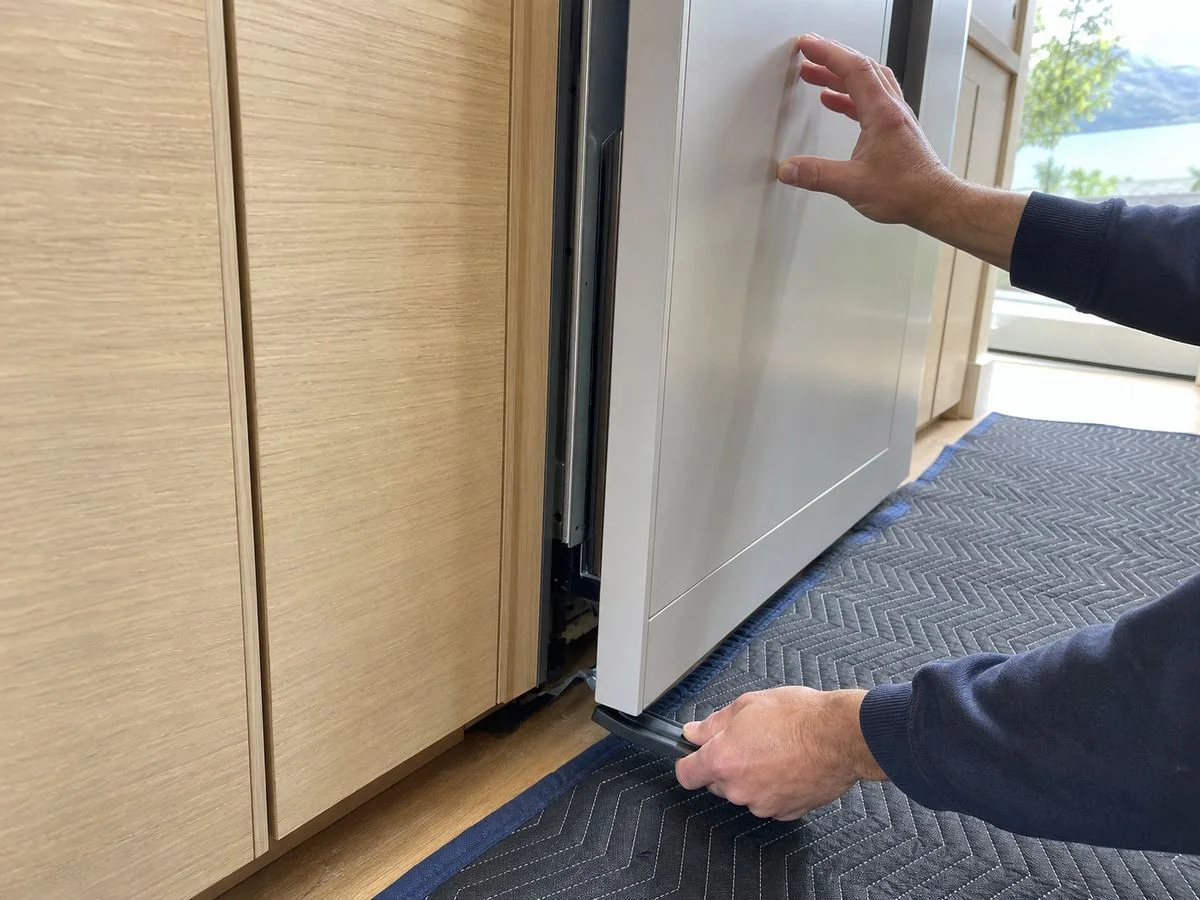
Berkeley's marine layer does real work on a refrigerator. The fog cycles that roll off the bay each evening keep humidity high, which swells door gaskets and feeds the steady film of dust and grit that settles into a condenser coil. On a recent Claremont call — a 600-series built-in maybe twenty years into its life — the owner was sure the compressor was dying because it ran constantly and the box sat a few degrees warm. The coil was simply packed solid with dust and pet hair; head pressure was high, but there was no leak. A full clean and a fan check brought the cycling back to normal with no sealed-system work at all. In the Berkeley Hills the same damp air plus tighter, older cabinetry means we plan the pull before we arrive, so the unit comes forward without scuffing the millwork. Humidity ages gaskets and condensers here faster than the inland East Bay, which is exactly why airflow and condenser checks sit so high on the list above.
A household in the Elmwood corner of 94705 called with the classic split: fresh-food section warm while the freezer still held a solid 0°F. They had braced for a compressor quote. The probe told a different story — the freezer circuit was fine, so the sealed system was healthy; the upper evaporator fan had stalled and the fresh-food coil had glazed with frost behind it. The repair was an OEM fan motor and a defrost check, then a re-probe that showed the fresh-food box back to 38°F before we left. Up the hill toward 94708, where the foggier evenings hit older cabinets hardest, we keep a standing reminder for owners to have the condenser cleaned on a schedule — the cheapest insurance against the "both warm, running constantly" pattern that otherwise sends people shopping for a new unit they don't need.
A not-cooling call gets the same documentation discipline as anything else we touch — whether it is a warm fresh-food section or a side complaint like an ice maker slow, jammed or producing hollow cubes, the finding has to be something you can see, not a verbal verdict. Before we name a part or a price, a technician records temperature readings, condenser/evaporator photos, model-number proof, factory-authorized Sub-Zero OEM fan/gasket/control-board evidence. That is what turns "your Sub-Zero needs a compressor" into a claim you can check: the probe number for each compartment, the photo of the choked or clean coil, the serial plate that pins down the exact unit, and the part that actually matched it. Same-day routing is available when the route allows; either way, the decision rests on readings and images, not empty badges.
A close-up of the part that failed and a wider shot of where it sits — together they show why the box went warm and what was done about it.

Tell us which compartment is warm — fresh-food, freezer, or both — and have the model and serial tag handy. With that we can give a real first read before anyone visits, and the diagnostic is credited toward the repair if you go ahead.
On a dual-refrigeration Sub-Zero the fresh-food side has its own evaporator and fan, so it can drift warm while the freezer stays cold. The usual causes are a stalled evaporator fan, a frosted coil from a defrost fault, or a thermistor reading wrong. It is rarely the compressor when only one compartment is affected.
Fresh-food should hold near 38°F and the freezer near 0°F. If the fresh-food box climbs past about 45°F, or the freezer rises above the low teens, move perishable and frozen food to a backup and stop relying on the unit until it is diagnosed. Repeatedly opening the door to check only makes it worse.
Usually not. A condenser packed with dust or pet hair makes the compressor run non-stop with high head pressure and a box that never quite gets cold. A full condenser clean and a fan check fixes most of these without touching the sealed system. We confirm with a temperature probe before naming any part.
Yes. A failed thermistor, a control board fault or a display alarm can leave a unit warm even though the compressor and fans are healthy. We read the model and serial tag, check the live temperatures against what the board reports, and verify the failed component with a meter before replacing it.
Aim for a fresh-food section near 38°F and a freezer near 0°F, both cycling on and off. A brief rise after groceries or a long door-open is normal and recovers within an hour. But a fresh-food box that sits consistently above about 42°F is a real fault worth diagnosing — airflow, a fan, defrost or the sealed system — not just a door-left-open blip.
On a dual-refrigeration unit the fresh-food side has its own coil and fan, so an airflow, evaporator-fan or defrost issue can stop cold from reaching it while the freezer holds. Berkeley's fog-driven humidity speeds coil frosting, which is a common trigger here. When only one compartment drifts, it is usually that upper circuit and not the compressor.
What a not-cooling repair runs in Berkeley depends on which circuit is at fault — airflow and fan jobs sit low, sealed-system work sits high. These are honest East Bay ranges before we read your unit.
| Service / symptom | What it includes | Berkeley price range | Typical time |
|---|---|---|---|
| Diagnostic visit (credited) | On-site temperature probe, model/serial read, fault isolated; fee credited to an approved repair. | $115–$175 | 45–75 min |
| Condenser deep-clean + airflow verification | Pull the grille, clear Berkeley fog-dust loading from the coil, fan check, re-probe both boxes. | $190–$390 | 1–2 hr |
| Evaporator or condenser fan motor | OEM fan motor matched to the serial; re-probe the affected compartment after. | $340–$720 | 1–2.5 hr |
| Thermistor / temperature sensor | Meter the suspect sensor, replace, confirm live temps track the board. | $240–$520 | 1–2 hr |
| Defrost system (heater/sensor/timer) | Controlled thaw of the iced coil, test and replace the defrost component, verify recovery. | $300–$700 | 1.5–3 hr |
| Sealed system / compressor (built-in) | EPA-certified instrumentation, refrigerant-side repair or compressor on a built-in cabinet. | $1,700–$3,400 | half–full day |
What moves the final number: the model and series, how far the built-in has to come forward in tight Berkeley cabinetry, part availability, and whether the fault is electrical (fan, sensor, board) or refrigerant-side. The diagnostic fee is credited toward an approved repair.
The full service page for built-in refrigerators, columns, freezers and wine units.
TechnicalWhen both sides stay warm and the fault is refrigerant-side, verified the right way.
DecideWhat to weigh when a not-cooling repair starts to approach the price of a new unit.
How the step-by-step not-cooling diagnosis worked out for East Bay households.
“They walked the same checklist they describe here — symptom, model, temperatures, then the part. Nothing skipped.”
Sofia R. · Elmwood
“Fresh-food side warm but the compressor running fine — I feared the worst. It was just the air damper stuck shut between compartments. Cheap fix, and they explained exactly why airflow was the culprit.”
Brian K. · Albany
“The visit fee came right off the cost of the thermistor repair, just as the page promised. Fair, and exactly the number they quoted on site.”
Lena M. · Piedmont
Local dispatch reference: 1935 Addison St, Suite A, Berkeley, CA 94704. Appointments are arranged by phone or online booking.