Skip to content
Berkeley & East Bay · independent Sub-Zero service Call (510) 390-9712Book Online
Berkeley & East Bay Sub-Zero specialists Evidence-first diagnostics, same-day routing when available, and factory-authorized Sub-Zero OEM parts when replacement parts are required. Local dispatch reference
Berkeley Sub-Zero Repair
Sub-Zero repair · Berkeley
Cold-side symptom · Berkeley & the East Bay

Sub-Zero Leaking Water in Berkeley

Find where the water is really coming from — and stop it before it wicks into a Berkeley subfloor. Most built-in leaks trace to a drain, a fitting, or a gasket, not a dying compressor.

4.9/5 · 1,198 verified customer reviews

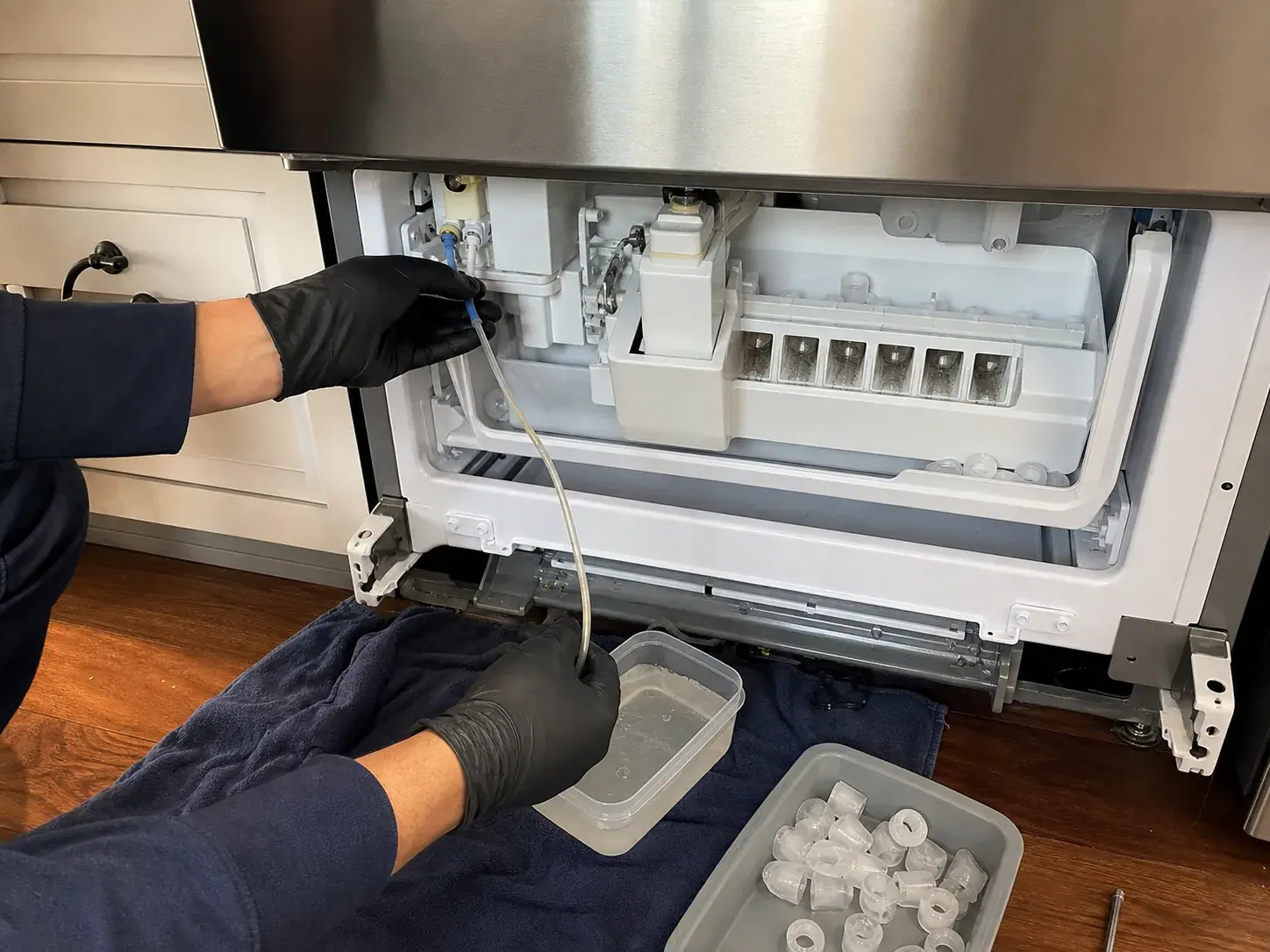
Technician inspecting the open ice-maker water line of a built-in Sub-Zero in a Berkeley kitchen

A built-in Sub-Zero almost never leaks because something dramatic has failed. It leaks because one of three small water pathways has quietly lost its way out — and in a Berkeley home that water has a talent for hiding. In a brown-shingle Craftsman off Spruce Street, a 1920s bungalow in the Elmwood, or a hillside post-and-beam above Grizzly Peak Boulevard, the cabinet was framed around the unit decades ago. So instead of an obvious puddle, the first clue is often a warped board at the toe-kick, a musty note under the deli drawers, or a thin slick that appears overnight and is gone by noon.

Because these units are recessed flush into millwork, a slow drip can travel along the cabinet base and soak into the subfloor long before it ever reaches daylight. The damp marine air that pushes through the Golden Gate most summer mornings makes it worse: kitchens in the West Berkeley flats around 94710 and the fog-belt streets up in 94708 carry more humidity, which means more condensate moving through the appliance every single defrost cycle. The work, then, is never to grab a part first. It is to figure out which water system is actually failing.

Where Berkeley leaks come from

The four sources we trace

1. A choked defrost drain

The most common culprit by far. Meltwater from the evaporator is supposed to run down a pencil-thin tube to a pan over the condenser, where the heat evaporates it away. Years of food oils and mineral residue narrow that tube until it freezes shut; the next defrost cycle then backs up and spills onto the freezer floor or out the toe-kick. Older built-ins in North Berkeley and the Le Conte district are the regulars here.

2. The ice-maker fill line or inlet valve

Plumbed-in ice and water depend on a press-fit fitting and a solenoid valve that opens for a few seconds per cycle. A nicked saddle valve, a tired ferrule, or a valve that no longer seats fully will weep continuously. Many Berkeley kitchens still feed these from aging copper or galvanized supply runs, and the sediment they shed is hard on the small valve seat.

3. Gasket sweat & door seal loss

When a magnetic door gasket hardens or pulls away at a corner, humid room air slips in and condenses on the cold interior, then drips down the front lip. It looks like a leak but it is really a seal problem — common on heavily used units in Claremont and Rockridge-border kitchens where the door swings hundreds of times a week.

4. A cracked or displaced drain pan

The shallow pan that catches and evaporates meltwater can crack with age or get knocked off its seat during a prior service. On hillside homes around Claremont and the upper Berkeley Hills, decades of small foundation settlement can leave the whole unit a hair out of level, so the pan no longer drains where it should and overflows the back edge.

Before you call

Quick checks you can do safely

  • Lay a dry paper towel flat under the toe-kick overnight and note where it darkens first — that tells us whether the water starts at the front lip (gasket) or the rear floor (drain).
  • Close a dollar bill in the door and tug; if it slides out with no grip, the gasket is the suspect, not the plumbing.
  • Check whether the leak only appears every several hours; a clock-like rhythm points straight at the defrost cycle and the drain.
  • If you have a plumbed water line, glance at the shutoff and the braided hose for a green crust or a damp ferrule before you touch anything else.
Step by step

How to clear a frozen defrost drain

If the leak follows the defrost rhythm, this is the one repair a careful homeowner can attempt before booking. Stop at any point that feels beyond comfortable — a wrong move near the sealed system is far costlier than a service call.

  1. Switch the unit off and clear the freezer. Turn the refrigeration off at the control panel so the defrost heater stops cycling, then empty the lower freezer section. On a Berkeley built-in framed tight into older cabinetry, give yourself room to reach the rear floor of the compartment.
  2. Locate the defrost drain opening. Pull the lowest rear panel inside the freezer. Behind it sits a small drain hole feeding a tube that carries meltwater down to a pan above the condenser. A plug of cloudy ice over that hole is the tell-tale sign of a blocked drain.
  3. Thaw the ice plug. Let the compartment sit open and powered down for a few hours, or speed it along by pouring a baster of warm — never boiling — water directly onto the frozen drain. You will hear it break free and trickle through once the channel reopens.
  4. Flush the tube without forcing metal. Run warm water with a pinch of baking soda through the opening to lift the grease and biofilm that narrow the channel over the years. A length of soft silicone tubing clears residue safely; never push stiff wire that can puncture the line.
  5. Check the pan and put it back together. Confirm meltwater now reaches the pan over the condenser and that the pan is not cracked or knocked off its seat. Refit the panel, restore power, and watch the floor for a day. If the drip returns, the fault is upstream and worth a technician's eyes.
When it is time for us

Leaks that are not a DIY job

If the water returns after you have cleared the drain, if the floor under the deli drawers is icing over, or if you can see a steady weep at a valve, the fault is past the point of a baster of warm water. A continuously leaking inlet valve, a cracked sealed-system component sweating refrigerant oil, or a unit that needs re-leveling and a new pan all call for proper tools and EPA-handled refrigerant work. The sooner that happens, the less chance Berkeley's damp air and your hardwood conspire to turn a $200 part into a flooring claim. See our Berkeley repair cost guide for what those jobs typically run, or read how plumbed leaks tie back to the ice-maker and water line. Related cold-side symptoms: a noisy or buzzing unit and a freezer that will not freeze.

· FAQ

Leaking Sub-Zero questions, answered for Berkeley

Is a small amount of water inside my Sub-Zero ever normal?

A faint film of condensation on the back wall during a defrost cycle is normal and clears itself. Standing water under the drawers, a puddle on the floor, or ice forming on the freezer floor is not — it means meltwater is escaping its drain or a supply fitting is weeping, and it will keep going until the path is corrected.

Why does the water show up a foot away from the fridge in my Elmwood kitchen?

Built-in Sub-Zeros sit flush in cabinetry, often over hardwood that has settled. A slow leak runs along the cabinet base or the toe-kick and surfaces wherever the floor dips — frequently a board or two away from the actual source. That is exactly why we trace the leak rather than swap the first part we see.

Could the Hayward Fault really affect my refrigerator's drainage?

Indirectly, yes. Many Berkeley Hills and Claremont homes sit on settled foundations and piers, and decades of small shifts leave kitchen cabinetry slightly out of level. A drain trough that no longer sits dead-flat lets water pool instead of running off, so re-leveling the unit is sometimes part of the fix.

How fast can you come out, and what does a leak diagnosis cost?

We route same-day across Berkeley, Albany, Kensington, and the El Cerrito and Oakland borders when a slot is open. The $89 diagnostic is credited toward the repair, and our work carries a 365-day parts-and-labor warranty.

Stop the leak before it reaches the floor

Tell us where the water shows up and roughly how often. You will get a clear price before any work begins — and the $89 diagnostic is credited to the repair.